

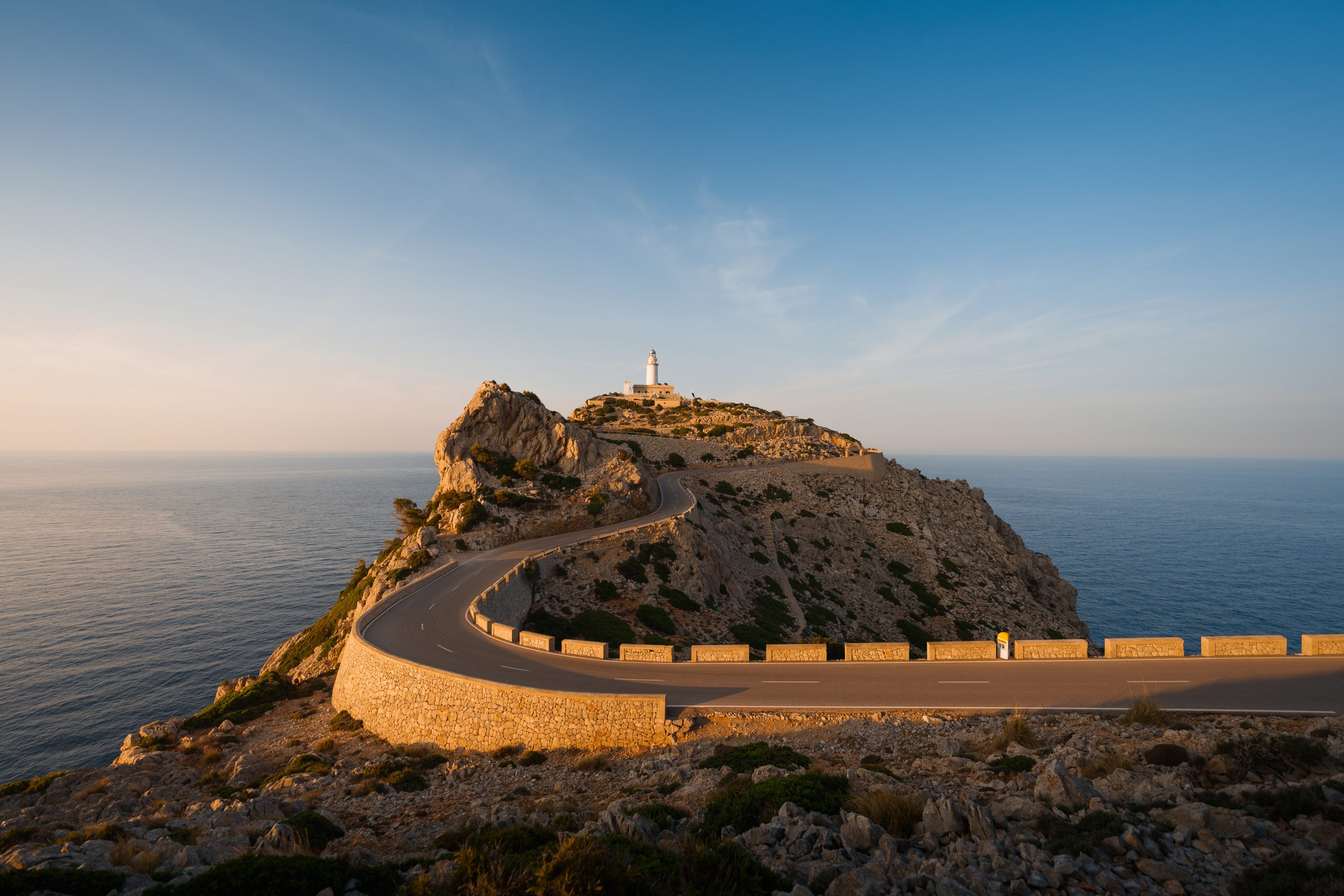

Mallorca in winter feels like a different island. The summer crowds thin out, life slows down, and the mountains, historic towns, markets and coastal roads stop being scenery and become the reason to come.
Palma carries on with everyday city life. The Serra de Tramuntana becomes far more inviting for walking and driving. Villages like Valldemossa, Deià and Sóller can be enjoyed without the summer crush. January brings some of the island’s most important festivals, and by late winter the almond trees turn parts of the countryside white and pale pink.
Yes, the weather is cooler and less predictable, and some seasonal hotels, beach clubs and restaurants shut for the winter. But if you’d rather explore, eat well, walk and drive through beautiful scenery than lie beside a pool all day, winter might be the best time you ever choose to see the island.
We run a car hire company here, and we spend all winter driving these roads. This guide covers what Mallorca is really like out of season, what the weather does, where to stay, what stays open, the best things to do, and the most beautiful places to explore by car.
The Short Answer: Is Mallorca Worth Visiting in Winter?
Yes. Mallorca is well worth visiting in winter, especially if you want to explore the island rather than spend the whole holiday on a beach. (As beautiful as the beaches are in Mallorca – there is MUCH more to this stunning island)
Here’s what you need to know:
- Daytime temperatures are mild for Europe, with average highs of around 15 to 16°C in Palma from December to February.
- The island is far quieter than in summer.
- Palma stays lively all year.
- Some seasonal hotels, restaurants and businesses in the beach resorts close or cut their hours.
- Winter is a brilliant season for hiking, cycling and road trips.
- January brings Sant Antoni and Sant Sebastià, two of the island’s biggest traditional festivals.
- Almond trees usually flower from late January into February.
- The Serra de Tramuntana is spectacular in winter.
- Cap de Formentor is far more enjoyable without the summer traffic restrictions.
- Rain and wind happen, so keep your plans flexible.
- Evenings can be surprisingly cold, especially inland and in the mountains.
If guaranteed heat and a proper beach holiday are what you’re after, winter probably isn’t your season. If you want to get to know Mallorca, it’s a very different story.
What Is Mallorca Like in Winter?
The main winter months run from December to February, although November and March can feel almost as quiet.
The biggest change isn’t the temperature. It’s the pace of the island. Mallorca welcomes an enormous number of visitors in the warmer months, and when winter arrives, all of that pressure simply disappears. Villages become easier to wander around, the roads are calmer, parking stops being a headache, and Palma’s old streets can be explored without wilting in the heat.
You also start to see the Mallorca that people actually live in. Palma isn’t a tourist resort. It’s the capital of the Balearic Islands, and it keeps working all year, with shops, restaurants, markets, cafés and galleries going about their business. The same goes for many inland towns.
The real difference is in the seasonal coastal resorts, where some hotels, beach clubs and tourist businesses close completely or run reduced hours between autumn and spring.
Mallorca doesn’t close for winter. Its summer tourism industry simply quietens down. For many visitors, that’s exactly the appeal.
Winter also has its own calendar of traditional festivals and local celebrations. Before travelling, check our Mallorca Events 2026 guide for events taking place during your visit.
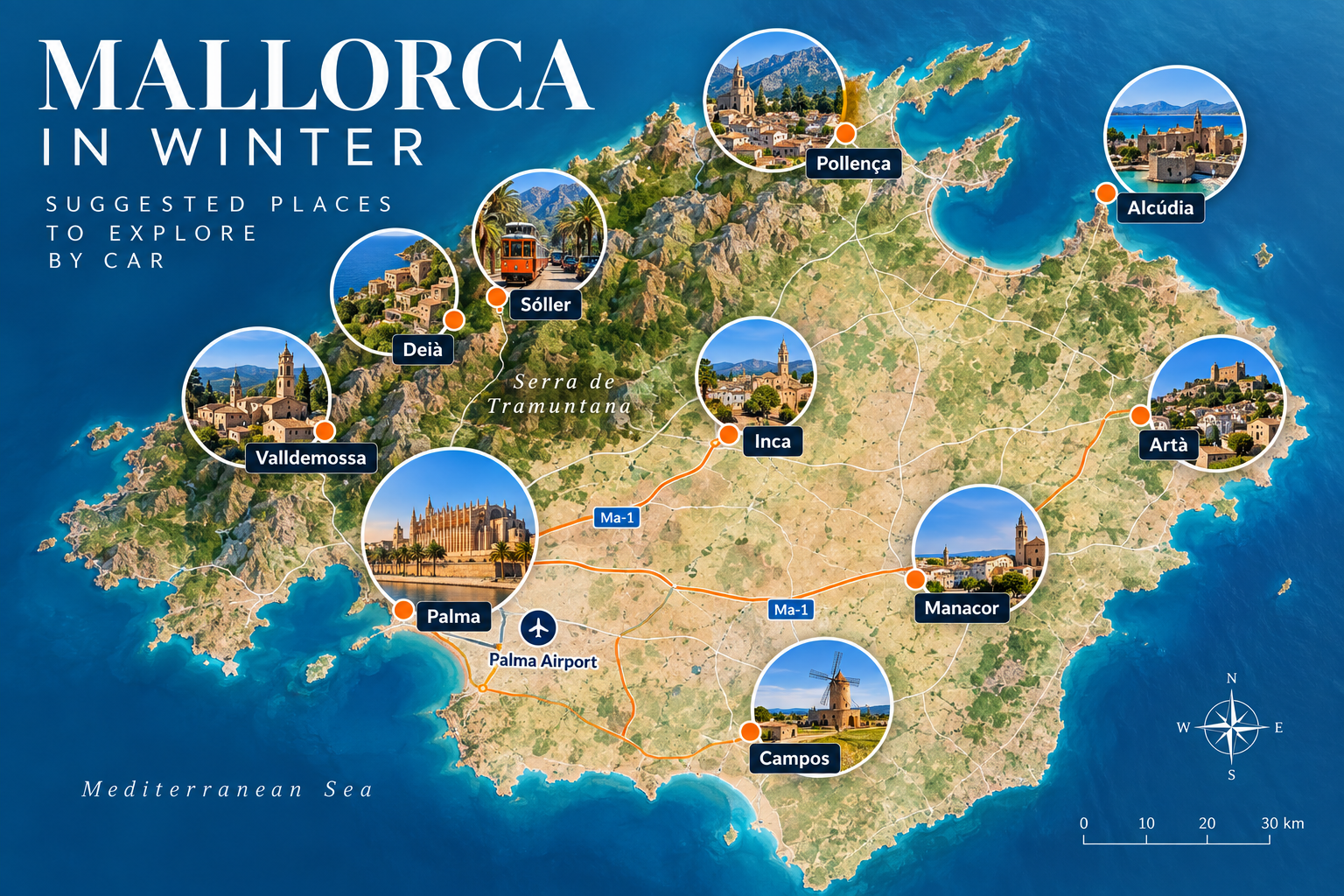
Mallorca in Winter – things to do and see
Mallorca Winter Weather: How Warm Is It Really?
One of the most common questions about Mallorca in winter is whether it’s actually warm. That depends on what you call warm.
Mallorca is mild compared with most of northern and central Europe, but winter is not summer. Official climate data from Spain’s national weather service, AEMET, recorded at Palma de Mallorca Airport over many years, gives these average daily maximums:
- December: around 16.1°C
- January: around 15.2°C
- February: around 15.4°C
Average minimums are much cooler, at roughly 5.4°C in December, 3.8°C in January and 4°C in February.
These are averages, not promises. You can get a sunny afternoon that feels far warmer than the numbers suggest, and you can just as easily get a cold, wet, windy day. The difference between sunshine and shade is bigger than you might expect, too. A sheltered café terrace in Palma can feel lovely in the afternoon sun while a viewpoint on the north coast feels properly wintry. Up in the Tramuntana, it gets colder again.
Does It Rain in Mallorca in Winter?
Yes, it does. Expect the possibility of rain on any winter trip. AEMET’s records for Palma Airport show roughly five or six days per winter month with at least 1 mm of rain.
That doesn’t mean five or six completely washed out days. Mediterranean weather changes quickly, and rain often comes and goes. The best approach is to stay flexible. If Tuesday morning is beautifully clear, make Tuesday your Tramuntana or Formentor day rather than waiting for Thursday. Keep Palma, the markets, the museums, the caves and long lunches in reserve for the greyer days.
Can You Sunbathe in Mallorca in Winter?
Sometimes, but don’t plan a holiday around it.
On a calm, sunny afternoon, somewhere out of the wind, sitting outside can be genuinely lovely. You’ll still see people on café terraces, strolling along the waterfront and sitting by the sea. The Mediterranean, though, is much colder than in summer, and winter isn’t really swimming season. A few hardy souls swim all year, but most visitors will find the sea too cold for a conventional beach holiday.
What winter does is change how you experience the coast. Walk the beaches. Explore the coves. Drive the coastal roads. Watch the winter waves from a viewpoint. Photograph beaches with no umbrellas in sight. The coastline is still one of Mallorca’s greatest attractions. It simply becomes a different kind of attraction.
Why Visit Mallorca in Winter?
There are plenty of reasons. Here are the ones that matter most.
Mallorca Is Much Easier to Explore
This is probably the biggest one. Some of the island’s most spectacular places are linked by narrow mountain and coastal roads that get very busy in peak season. In winter the whole experience changes. Instead of spending the day worrying about traffic and parking, you can actually enjoy the journey.
Leave Palma after breakfast, head into the mountains, stop in Valldemossa, carry on to Deià and Sóller, and take a detour whenever something catches your eye. That freedom is one of the great pleasures of a Mallorca winter road trip.
You See a More Local Side of the Island
Summer Mallorca is wonderful, but tourism inevitably takes over in many areas. Winter rebalances things. Visit an inland market, have a coffee in a village square, walk through Palma on an ordinary Wednesday, or stop for lunch somewhere miles from the resorts, and you get a feel for everyday life here. For repeat visitors, this alone can change how they see the island.
Winter Is Brilliant for the Outdoors
Trying a serious hike in the middle of a Mallorcan summer can be brutal. The cooler months are far better suited to walking, hiking and cycling, and the island’s terrain gives you endless variety, from flat farmland to the peaks and valleys of the Tramuntana.
The Landscape Turns Green
Mallorca isn’t brown and dusty all year. Autumn and winter rain bring the countryside back to life, especially inland and in the mountains. Then, towards the end of winter, comes one of the island’s most beautiful natural events: almond blossom season.
Where to Explore in Mallorca in Winter by Car
One of the biggest advantages of a winter visit is the freedom to roam. In the busiest summer months, some of Mallorca’s loveliest roads, villages and viewpoints get crowded. In winter the pace drops, parking gets easier, and the journey becomes as enjoyable as the destination.
From Palma you can drive into the Serra de Tramuntana to see Valldemossa, Deià and Sóller, head north towards Pollença and the dramatic Formentor peninsula, or go inland through traditional towns such as Inca. The east and southeast offer another side of the island altogether, with Artà, Manacor, Campos and the surrounding countryside well worth a day if you want to get away from the better known routes.
Don’t treat any route as fixed. One of the pleasures of a Mallorca winter road trip is being able to change plans with the weather. If the Tramuntana is clear in the morning, go for the mountains. If cloud is gathering in the northwest, spend the day in Palma or drive inland instead. During almond blossom season, the best part of the day might simply be turning off the main road to see what you find.
If you’re planning to explore independently, read our complete guide to driving in Mallorca before setting off. It covers practical information for driving around the island, including local roads, parking and what visitors should know before getting behind the wheel.
Almond Blossom: One of the Best Reasons to Visit Mallorca in February
If you’re thinking about Mallorca in February, almond blossom season is a very good reason to go.
Late in the winter, almond trees across the Mallorcan countryside burst into delicate white and pale pink flowers. The exact timing depends on the weather, the altitude and the location, so there’s no guaranteed date when every tree flowers at once. Generally though, late January through February is the window.
And it can transform the landscape. Rather than treating blossom as a single attraction, weave it into a drive through rural Mallorca. The central, eastern and southeastern parts of the island are particularly rewarding.
This is exactly the kind of experience that’s better with your own car. You’re not heading for a ticket desk or a timed entrance. You’re exploring a landscape that changes week by week. Stop for coffee in a village. Visit a market. Take a country road. Have lunch somewhere you never planned to go. That slower way of travelling suits winter in Mallorca perfectly.
Explore Palma Without the Summer Crowds
If you’re wondering where to stay in Mallorca in winter, Palma is the easiest answer for a first visit. Unlike a seasonal beach resort, it’s a living Mediterranean city all year.
Winter is a great time for the historic centre. Wander the old streets around the cathedral, explore La Lonja, stroll down Passeig del Born and stop for coffee without having to escape the midday heat.
Visit La Seu, Palma Cathedral
Palma’s enormous Gothic cathedral, known locally as La Seu, dominates the waterfront and is one of the island’s most important landmarks. Winter is a lovely time for a cultural visit, although opening hours can be shorter, so check the official schedule before you go. Right next door is the Royal Palace of La Almudaina, which makes this corner of the city one of the best starting points for exploring historic Palma.
Visit Mercat de l’Olivar
For a taste of the city beyond its monuments, head to the markets. Mercat de l’Olivar has been trading since 1951 and is still one of Palma’s most important food markets, selling fruit, vegetables, meat, fish, seafood, cheese and charcuterie, with plenty of places to eat and drink inside. It’s perfect on a winter morning or on a day when the weather can’t make up its mind.
Experience Mallorca’s Winter Festivals
Winter isn’t just the quiet season. It’s also when some of the island’s most traditional celebrations happen.
Sant Antoni
Sant Antoni is celebrated around the 16th and 17th of January, with particularly big festivities in Sa Pobla, Manacor, Artà and Pollença. Expect bonfires, demons, music, food and whole towns out celebrating. It’s a very different Mallorca from the one in the summer brochures.
Sant Sebastià in Palma
Shortly afterwards comes Sant Sebastià, the patron saint of Palma. The main feast day is the 20th of January, and the night of the 19th traditionally brings bonfires, street barbecues, concerts and parties across the city.
If you’re interested in Mallorcan culture rather than just the scenery, January can be one of the most rewarding months to visit.
Take a Winter Road Trip Through the Serra de Tramuntana
If there’s one drive that shows why a car earns its keep in winter, it’s the Serra de Tramuntana. The range runs along the northwest of the island and holds UNESCO World Heritage status as a cultural landscape. Mountains, stone terraces, olive groves, villages and the sea combine into some of the most memorable scenery in Mallorca.
Valldemossa
Valldemossa is one of Mallorca’s most recognisable villages, all stone buildings, steep lanes and dramatic mountain backdrops. Winter suits it especially well. Wander the streets and stop at a bakery for a coca de patata, the soft potato bun the village is famous for.
Deià
Carry on towards Deià and the road itself becomes part of the experience. Mountains rise on one side, the Mediterranean flashes into view on the other. Deià has drawn writers, artists and musicians for decades and remains one of the island’s most famous villages. Out of season, its quiet atmosphere makes it perfect for a slow visit.
Sóller
Sóller sits in a fertile valley ringed by the Tramuntana. The town is known for its historic railway to Palma, and an old tram links the town with Port de Sóller. With a car, Sóller combines easily with Valldemossa and Deià into a full day in the mountains.
Fornalutx
Near Sóller is the beautiful stone village of Fornalutx. You don’t need a sightseeing checklist here. Park the car, walk through the lanes and slow down. That’s a big part of what Mallorca in winter is all about.
Drive to Cap de Formentor in Winter
Cap de Formentor is one of the most spectacular places on the island. The peninsula stretches dramatically into the Mediterranean at the northern tip of Mallorca, famous for its cliffs, viewpoints, twisting road and lighthouse.
Winter brings a real advantage for drivers. Private vehicle access is restricted during the busier months. In 2026, for example, the restriction period runs from May into October during specified hours. Winter falls well outside that window, which makes it an especially good time for the drive.
Always check current restrictions, weather and road conditions before you set off, because access rules can change. And don’t make the lighthouse your only goal. Formentor is about the whole journey: the road, the cliffs, the changing light and the viewpoints along the way.
Hiking in Mallorca in Winter
For walkers, winter can be the best season of all. The GR221 Dry Stone Route crosses the Tramuntana along a network of historic paths. The Consell de Mallorca currently lists more than 260 kilometres of signposted main route and variant sections, linking landscapes and villages across the mountains.
You certainly don’t need to walk the whole thing. Individual stages and shorter routes give you plenty of ways to experience the mountains on foot.
That said, don’t mistake Mallorca’s mild climate for easy mountain conditions. Weather can change quickly, paths get wet and slippery, higher ground is much colder than Palma, and daylight is shorter. Check the forecast and official route information before you set out, wear proper footwear and pick walks that match your experience.
Cycling in Mallorca During Winter
Mallorca is one of the best known cycling destinations in Europe, and winter is a proper part of the cycling season. The island has everything from gentle roads across the central plains to serious mountain climbs in the Tramuntana. Experienced riders come specifically for roads like Sa Calobra, while casual cyclists can stick to easier routes through farmland and villages.
If you’re driving, remember that quiet roads aren’t empty roads. Expect cyclists, particularly in the mountains, give them plenty of room when overtaking, and take extra care on bends and narrow sections.
Visit Mallorca’s Traditional Markets
One of the easiest ways to experience the local side of the island is a weekly market. Markets remain a fixture of everyday life here.
Sineu Market
The Wednesday market in Sineu is one of Mallorca’s oldest and best known. It spreads through the town centre with food, produce, crafts and all sorts besides. Rather than dashing in and out, make a morning of it: breakfast or lunch in Sineu, then a drive through the central countryside.
Plenty of other towns hold weekly markets too, so it’s easy to fit one into any winter road trip.
Discover Mallorcan Food in Winter
Winter is a good time to get to know Mallorcan food properly. Instead of hunting for a beachfront table, seek out bakeries, markets, traditional cellars and the restaurants that feed local communities all year.
Look out for these classics:
- Sobrassada: Mallorca’s distinctive cured sausage.
- Pa amb oli: bread with olive oil and tomato, usually with cheese, ham or other toppings.
- Tumbet: a traditional vegetable dish of potato, aubergine and peppers.
- Frit mallorquí: a fried dish of potatoes, vegetables and meat or offal, depending on the recipe.
- Ensaimada: the famous pastry, baked in a spiral.
- Gató d’ametlla: Mallorcan almond cake.
Winter is also a good moment to explore the island’s wine. The Binissalem wine region is an easy drive from Palma, and wineries are scattered right across the island. Check ahead before visiting, because tour and tasting schedules can change out of season.
Mallorca’s food scene extends far beyond traditional dishes, with everything from neighbourhood tapas restaurants to destination dining. If food is part of your trip, see our Best Restaurants in Mallorca 2026 guide for places worth adding to your itinerary.
What to Do in Mallorca When It Rains
A wet day doesn’t have to be a wasted day. The best known rainy day option is the Cuevas del Drach near Porto Cristo, an enormous cave system with the famous underground Lake Martel. The caves run a winter timetable and combine nicely with a drive through eastern Mallorca.
Other good options for grey weather include the museums and galleries of Palma, the cathedral, the indoor markets, long lunches, wine tastings, shopping and exploring the island’s larger towns.
Again, this is where your own car comes in handy. If the mountains vanish under cloud, just switch the day’s plan instead of forcing it.
Mallorca in December
December in Mallorca combines winter calm with Christmas atmosphere. Palma makes an excellent base, since the city stays busy with lights, restaurants, shops and cultural events. Average daytime highs at the airport sit around 16°C, though evenings are much cooler.
December works particularly well for:
- Christmas atmosphere in Palma
- City breaks
- Walking and sightseeing
- Mountain drives on clear days
- Food and wine
Opening times can shift around Christmas and New Year, so check with individual attractions and restaurants before making a special trip.
Mallorca in January
January in Mallorca is one of the quietest and most culturally interesting months of the winter. Average daytime highs around Palma are roughly 15°C. It’s also when the Sant Antoni and Sant Sebastià celebrations take place.
January is an excellent month for:
- Hiking
- Cycling
- Photography
- Exploring Palma
- Mountain villages
- Traditional festivals
- Quiet road trips
Towards the end of the month, the first almond blossom may start to appear, although flowering varies from year to year and place to place.
Mallorca in February
February might be the most underrated month of the Mallorcan winter. Temperatures stay cool but mild, the days are getting longer, and the almond blossom can transform the countryside.
February is especially good for:
- Almond blossom drives
- Hiking
- Cycling
- Village hopping
- Photography
- Romantic breaks
- Combining Palma with rural Mallorca
If you want a winter trip that mixes culture, nature and the first hints of a Mediterranean spring, February deserves serious thought.
Where to Stay in Mallorca in Winter
Where you stay matters more in winter, because some coastal areas are highly seasonal.
Palma
For a first winter visit, Palma is our easiest recommendation. Restaurants, shops, culture and city life are on your doorstep, and most of the island is within reach for day trips.
Sóller
Sóller is a great choice if mountain scenery and walking are your priorities. Do check that your accommodation and nearby restaurants open in winter before you book.
Pollença
Historic Pollença makes a good base for the north of the island, the Tramuntana and Formentor. Don’t confuse it with the much more seasonal Port de Pollença down the road.
Rural Mallorca
A rural finca can be wonderful in winter. The peace, the countryside and the slow pace are often exactly what makes a trip at this time of year special. But there’s one thing to check that summer visitors rarely think about: heating. A beautiful stone house built to stay cool in August can feel very different on a damp January evening. Confirm your accommodation has proper winter heating before you book.
What Should You Pack for Mallorca in Winter?
Layers are the answer. For a typical winter trip, pack:
- A waterproof jacket
- A warmer jacket for evenings
- Jumpers or fleeces
- Long trousers
- Comfortable closed shoes
- Proper walking boots if you plan to hike
- Sunglasses
- A small backpack for days out
- Sun protection for bright days
If you’re spending real time in the mountains, bring proper outdoor clothing. Mallorca’s winter climate is mild, but mild doesn’t mean warm all day.
Do You Need a Car in Mallorca in Winter?
If your trip is a weekend spent entirely in Palma, probably not. The city is walkable and public transport connects it with plenty of places around the island.
But if the point of your trip is to explore Mallorca in winter, a car gives you far more freedom. Winter holidays live and die by the weather. You might wake to a crystal clear morning and decide it’s a Formentor day. The forecast might convince you to move your mountain drive forward a day. You might spot almond trees in flower beside a country road and end up exploring villages you’d never heard of. Or you might linger over lunch in Valldemossa and let the afternoon take care of itself.
With your own car, the holiday works around Mallorca, rather than Mallorca having to work around your timetable.
If this is your first time hiring a car on the island, our Driving in Mallorca guide explains the practical side of exploring Mallorca by road before you arrive.
Winter Car Hire in Mallorca
If you’re flying into Palma and planning to explore beyond the city, arranging your car in advance means you can start your trip the moment you land.
We’re an independent, family run car hire company offering collection and return at Palma de Mallorca Airport. Your car waits for you in the airport car park opposite the terminal, so there’s no queueing at a rental desk and no trip to a depot across town. What you get:
- No deposit
- No hidden charges
- No rental desk queues
- No shuttle bus
- Free additional drivers
- Free child and baby seats
- Insurance included in the quoted price
- Unlimited mileage
- A full to full fuel policy
For a winter trip built around the mountains, the villages, Formentor, the markets or the almond blossom, that kind of freedom matters.
If you’re flying into Palma and intend to explore beyond the city, arranging your car rental at Palma de Mallorca Airport in advance means you can begin your road trip as soon as you arrive.
Have a question about collection, insurance, deposits, additional drivers or how the rental process works? Our Mallorca Airport Car Hire FAQ answers the most common questions before you book.
A Five Day Mallorca Winter Road Trip
Not sure where to start? This simple five day Mallorca winter itinerary combines Palma, mountains, countryside and coastline without trying to cram the whole island in.
Day 1: Palma
Spend your first day on the city. Visit La Seu, wander the old town and La Lonja, walk Passeig del Born and stop at Mercat de l’Olivar. Stay in Palma for dinner and see the city after dark.
Day 2: Valldemossa, Deià and Sóller
Drive into the Tramuntana. Start with Valldemossa, then follow the mountain road towards Deià and on to Sóller or Port de Sóller. Don’t overfill the day. The scenery between the villages is half the point.
Day 3: Central Mallorca
If it’s Wednesday, think about Sineu market. Then carry on through the rural interior. In late January and February, this is your almond blossom day. A winery visit fits well here too, as long as you book ahead.
Day 4: Pollença and Cap de Formentor
Explore Pollença, then continue out onto the Formentor peninsula. Give yourself plenty of time for the road and the viewpoints, and check conditions before you leave.
Day 5: Eastern Mallorca
Drive towards Porto Cristo and the Drach Caves. If the weather’s kind, combine the caves with Artà, Manacor or some coastal viewpoints instead of heading straight back to Palma.
One Rule: Stay Flexible
Check the weather each morning. If day two is washed out but day three is glorious, swap them. Winter Mallorca rewards anyone willing to bend the plan.
Is Mallorca in Winter Expensive?
Winter often offers much better value than high summer, particularly on accommodation and flights. But don’t assume everything is automatically cheap. Prices vary with dates, Christmas and New Year demand, events and the type of accommodation.
The bigger winter advantage is usually availability rather than price. Rooms and hire cars that are almost impossible to find in August can be easy to arrange in January or February.
Is Everything Closed in Mallorca in Winter?
No, and this is one of the biggest misconceptions about a winter visit.
Palma stays active. Towns and villages carry on with everyday life. Markets trade. Restaurants that serve local communities stay open. The major sights keep operating, although some run reduced winter hours.
What does change is the seasonal tourist industry. Some hotels, restaurants, beach clubs and tourist businesses in the summer resorts close for part of the winter, so always check opening hours for anywhere you particularly want to visit.
The truth sits between the two extremes. Mallorca doesn’t run as it does in July, but it certainly doesn’t shut down.
Is Mallorca Worth Visiting in Winter?
For the right traveller, absolutely. Winter shows you a version of Mallorca that millions of summer visitors never see.
You can walk through Valldemossa without the crowds. Drive the Tramuntana because you enjoy the road, not because you’re racing to the next stop. Watch waves crash onto an almost empty coast. Eat where the locals eat. Explore Palma’s markets. Stand by a Sant Antoni bonfire. Drive through fields of almond blossom in February.
There are trade offs, of course. The sea is cold, some places close, the weather is less predictable and the evenings are chilly. But those trade offs are part of what changes the island.
Mallorca in winter isn’t summer Mallorca with colder weather. It’s a different way of experiencing the island altogether.
If what you really want is the mountains, the villages, the food, the culture and the open roads, winter might just be when you love Mallorca most.
Frequently Asked Questions About Mallorca in Winter
Is Mallorca worth visiting in winter?
Yes. It’s an excellent winter destination for sightseeing, hiking, cycling, road trips, food, culture and exploring towns and villages. It’s less suitable if swimming and guaranteed beach weather are your main priority.
How warm is Mallorca in winter?
AEMET climate records for Palma Airport give average daily maximums of around 16.1°C in December, 15.2°C in January and 15.4°C in February. Individual days can be warmer or colder, and the mountains are generally cooler.
What is the coldest month in Mallorca?
January is generally the coldest month. Historic Palma Airport climate averages give January a daily maximum of around 15.2°C and an overall mean of about 9.5°C.
Does Mallorca close during winter?
No. Palma and the island’s established towns keep going all winter. However, hotels, restaurants and other businesses in the highly seasonal coastal resorts may close or reduce their hours.
Can you swim in Mallorca in winter?
You can, but the sea is cold and most visitors won’t find winter suitable for a swimming holiday. The beaches are still wonderful for walking, photography and coastal drives.
What are the best things to do in Mallorca in winter?
Exploring Palma, driving the Tramuntana, visiting Valldemossa, Deià and Sóller, walking sections of the GR221, cycling, browsing the weekly markets, driving to Cap de Formentor, eating and drinking your way around the island and hunting for almond blossom are all excellent options.
Is Mallorca good for hiking in winter?
Yes. Cooler temperatures make winter a superb walking season, especially in the Tramuntana. Just check the mountain forecast, the daylight hours and official route information before you set out.
When is almond blossom season in Mallorca?
Almond trees generally flower between late January and February, although the exact timing depends on the weather, the altitude and the location.
Is Palma open in winter?
Yes. Palma stays open and lively all year round, and it’s the best place to base yourself for most visitors. Restaurants, shops, markets and cultural attractions keep going, though some businesses run shorter winter hours.
Do I need a rental car in Mallorca in winter?
Not if you plan to stay mainly in Palma. A car becomes far more useful if you want to reach the mountain villages, rural Mallorca, Formentor, wineries, hiking trails and the almond blossom country on your own schedule.
Is December a good time to visit Mallorca?
Yes. December suits a Palma city break, Christmas atmosphere, food, culture and quieter sightseeing. Expect mild days, much cooler evenings and the occasional rainy one.
Is January a good time to visit Mallorca?
Yes. January is great for quiet sightseeing, hiking, cycling and local culture. Sant Antoni and Sant Sebastià are the month’s big traditional celebrations.
Is February a good time to visit Mallorca?
Yes, and it might be the most rewarding winter month of all. You get quieter roads, cool but comfortable conditions for the outdoors, longer days and the almond blossom.
Explore Mallorca This Winter
Winter gives you something summer rarely can: the space to explore Mallorca at your own pace.
Take the mountain road. Stop in the village you hadn’t planned to visit. Have lunch where the locals do. Follow the sunshine instead of a schedule, and discover the Mallorca that’s still here once the crowds have gone.
If you’d like the freedom to explore the island on your own terms, book your winter car with Mallorca Car Hire Company and collect it at Palma de Mallorca Airport.
No deposit. No hidden charges. No shuttle bus. No long rental desk queues. Just pick up your car and start exploring Mallorca.
If you want the freedom to explore the island independently, book your Mallorca airport car hire with Mallorca Car Hire Company and collect your car at Palma de Mallorca Airport.
See What Our Customers Say
Choosing a local car hire company should be based on more than what the company says about itself. You can read independent feedback from previous customers and their experiences hiring a car with us on Tripadvisor.
